What Is Courier Software and When Do You Need It?

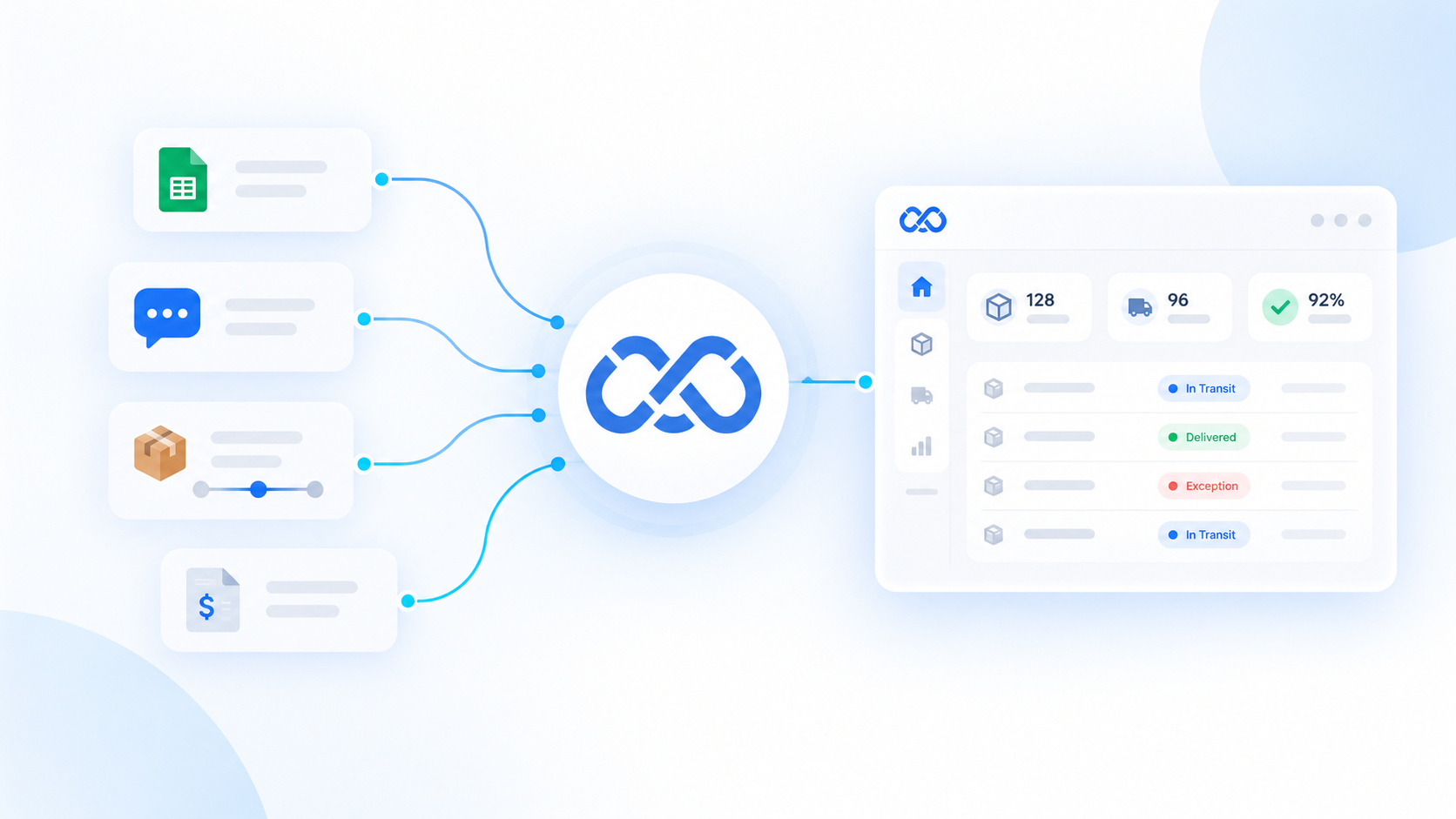
A courier company may begin managing its operations with simple tools: spreadsheets, emails, WhatsApp, and separate systems.
But as the volume of packages, customers, and shipments increases, keeping all that information updated and connected becomes increasingly challenging.
That is usually when the operation needs more than just additional spreadsheets.
What Is Courier Software?
Courier software centralizes the processes and information involved in a logistics operation.
Receipts, packages, customers, statuses, documentation, tracking, and billing can all be managed within a single workflow, preventing each stage from depending on a different tool.
The goal is not simply to digitize tasks, but to ensure that information follows each package throughout its entire journey.
When Does It Become Necessary?
There is no exact number of packages that determines when it is time to make a change. Instead, there are some clearer signs:
- you need to check multiple tools to find the status of a shipment;
- the same information is entered more than once;
- statuses are updated manually;
- finding a package takes longer than it should;
- customers constantly ask about their shipments;
- billing and operations function separately;
- more time is lost searching for information, increasing the risk of errors.
What Changes When Processes Are Centralized?
When information is connected, the team can review an operation’s history without having to reconstruct it from spreadsheets, messages, and separate systems.
That same visibility can be extended to customers, giving them direct access to up-to-date information about their operations without having to request it.
Centralization also makes it possible to reuse existing data for other processes, such as billing, and connect the operation with e-commerce platforms, APIs, communication services, and other systems.
The goal is to enter information once and use it throughout the entire process.
How MIDLA Solves This
MIDLA makes it possible to manage shipments, receipts, packages, customers, billing, automation, integrations, and tracking from a single platform.
This allows every stage of the operation to work from the same source of information, improving traceability and reducing reliance on separate systems and files.
The goal is not to replace Excel with another screen, but to build a more connected operation that is ready to grow.