7 Signs Your Logistics Operation Has Outgrown Excel

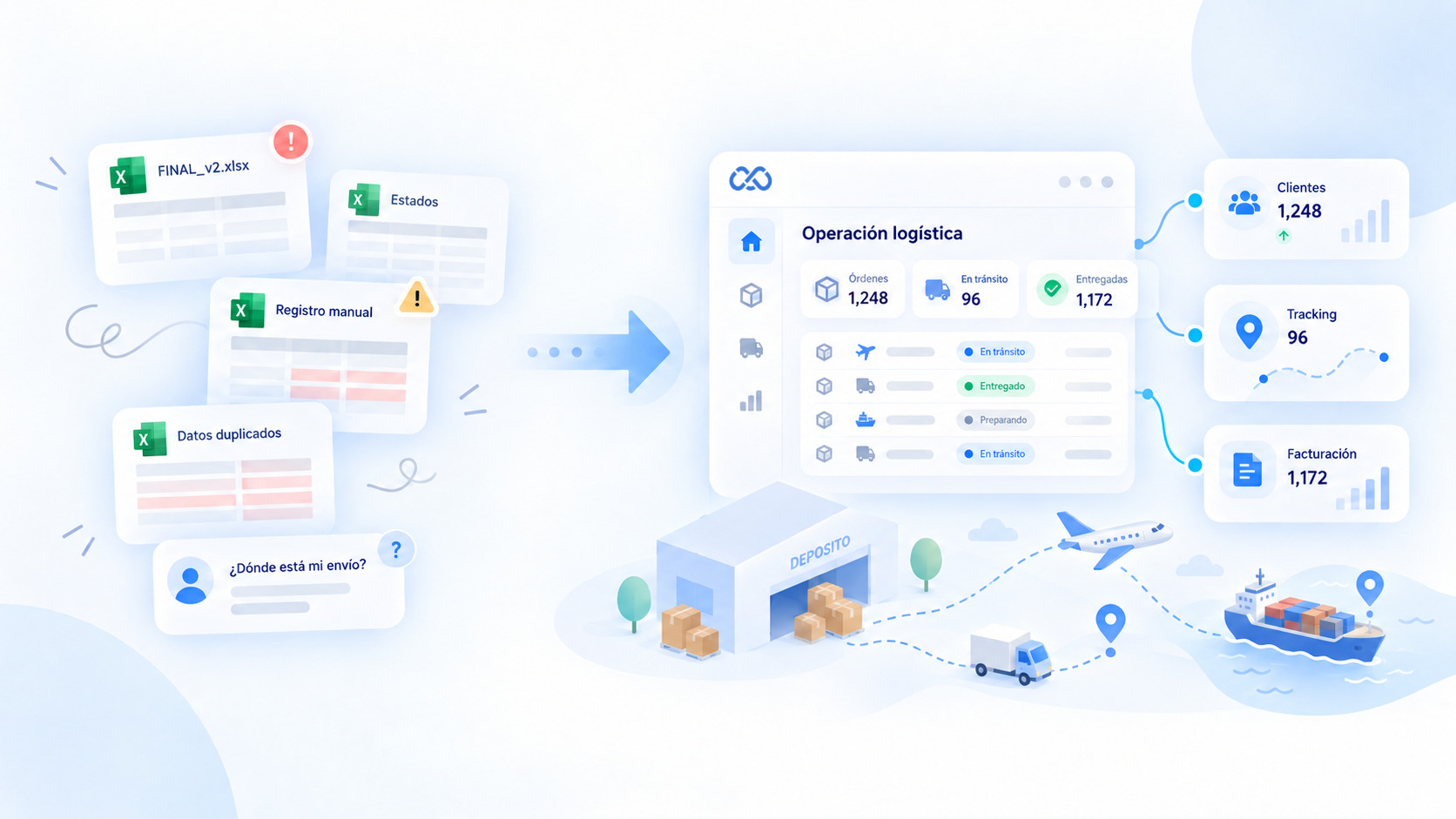
Excel can be a great tool when you are getting started.
But as the operation grows, a spreadsheet may end up holding information about shipments, customers, tracking, inventory, and billing.
Here are 7 signs that your operation may already need a more centralized structure.
1. There Are Multiple Versions of the Same Spreadsheet
When different files containing different information are being shared, there is no longer a single reliable source of truth.
2. Statuses Are Updated Manually
Every movement depends on someone remembering to update the information.
3. Finding a Package Requires Asking Someone
If locating a package means checking files and messages or asking another person, traceability is missing.
4. The Same Information Is Entered More Than Once
Customer, package, weight, shipment, or charge information is entered again at different stages of the operation.
5. Customers Constantly Ask About Their Shipments
When questions such as “Has it arrived?”, “Has it shipped yet?”, or “What is the tracking number?” come up every day, visibility is often lacking.
6. Billing Is Separate from the Operation
If information that already exists must be collected again for billing purposes, additional work is being created.
7. There Is No Centralized History
Knowing the current status is not always enough. It is also important to know what happened before and how each operation progressed.
What Changes When Processes Are Centralized?
Centralization allows shipments, receiving, packages, customers, billing, and other processes to work from the same source of information.
With MIDLA, automation and integrations can also be connected within the same environment.
The goal is not simply to replace Excel with another screen, but to prevent the operation from depending on a spreadsheet to function.